Behind every clothing brand is a chain of companies most shoppers never hear of: fiber producers, spinning mills, weaving and knitting mills, dyehouses and garment manufacturers. Some of these companies are very large, with dozens of factories and tens of thousands of employees, and some are vertically integrated from fiber to finished garment.
This guide lists major textile companies by their main stage in the value chain. It is a reference list based on scale, international reach and importance to global apparel supply, not a ranking by revenue. For the brands that buy from them, see the list of top clothing brands in the world.
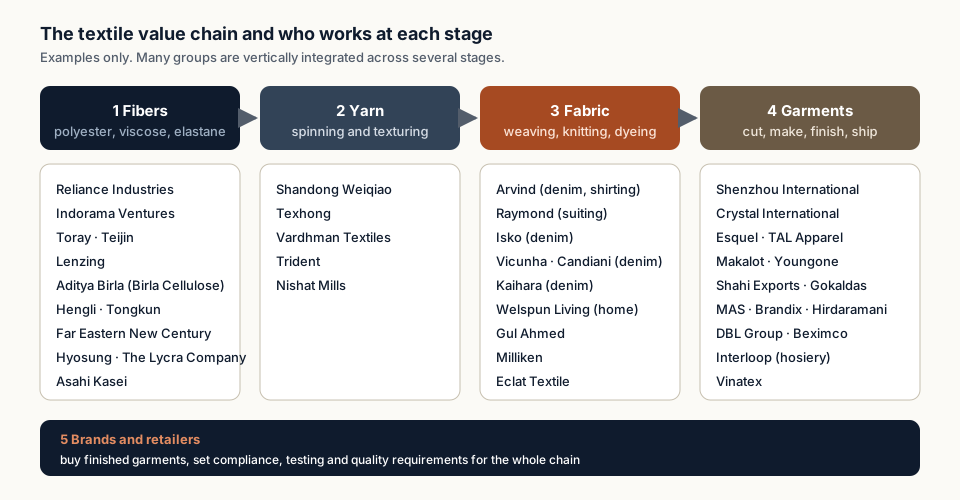
How the textile value chain works#
| Stage | What happens | Where it is concentrated |
|---|---|---|
| Fibers | Natural fibers are grown; manufactured fibers (polyester, nylon, viscose, elastane) are produced | China, India, Southeast Asia, USA, Europe |
| Yarn | Fibers are spun or textured into yarn | China, India, Pakistan, Vietnam, Turkey |
| Fabric | Yarn is woven or knitted, then dyed, printed and finished | China, India, Pakistan, Turkey, Bangladesh |
| Garments | Fabric is cut, sewn, finished and packed | China, Bangladesh, Vietnam, India, Cambodia, Sri Lanka, Turkey, Indonesia |
| Brands and retail | Design, marketing, sales | Worldwide |
Fiber producers#
Manufactured fibers now make up most of global fiber production, with polyester the largest single fiber. These companies supply the raw material for yarn and fabric mills.
| Company | Country | Main business |
|---|---|---|
| Reliance Industries | India | One of the world's largest polyester fiber and yarn producers |
| Indorama Ventures | Thailand | PET, polyester fibers and yarns; recycling |
| Toray Industries | Japan | Nylon, polyester, carbon fiber, technical textiles |
| Teijin | Japan | Polyester, aramid fibers |
| Hengli Group | China | Integrated PTA and polyester |
| Tongkun Group | China | Polyester filament yarn |
| Far Eastern New Century | Taiwan | Polyester and recycled polyester |
| Lenzing | Austria | Lyocell, modal and viscose fibers |
| Aditya Birla Group (Birla Cellulose) | India | Viscose staple fiber and other cellulosic fibers |
| Hyosung TNC | South Korea | Spandex (elastane), nylon, polyester |
| The Lycra Company | USA | Elastane fiber |
| Asahi Kasei | Japan | Elastane, cupro and other fibers |
The differences between cellulosic fibers such as viscose, modal and lyocell are explained in viscose vs modal.
Spinners and yarn producers#
| Company | Country | Main business |
|---|---|---|
| Shandong Weiqiao | China | One of the largest cotton spinning and weaving groups |
| Texhong | China (with large operations in Vietnam) | Core-spun and stretch yarns, fabrics |
| Vardhman Textiles | India | Cotton and blended yarns, fabrics |
| Trident | India | Yarn, terry towels, bed linen |
| Nishat Mills | Pakistan | Spinning, weaving, dyeing, home textiles, apparel |
Fabric mills and denim makers#
| Company | Country | Main business |
|---|---|---|
| Arvind | India | Denim, shirting, knits; also garments |
| Raymond | India | Worsted suiting fabrics and apparel |
| Welspun Living | India | Home textiles: towels, sheets |
| Gul Ahmed | Pakistan | Fabrics, home textiles, retail |
| Isko (Sanko Group) | Turkey | Denim fabric |
| Vicunha | Brazil | Denim and twill fabrics |
| Candiani | Italy | Premium and sustainable denim |
| Kaihara | Japan | Denim, including selvedge |
| Milliken | USA | Performance and industrial fabrics |
| Eclat Textile | Taiwan | Performance knit fabrics and garments |
Denim mills supply the brands in the list of top 100 denim jeans brands.
Garment manufacturers#
Large garment manufacturers produce for many brands at once. Their names rarely appear on labels, but they make a large share of the world's clothing.
| Company | Country (headquarters) | Main business |
|---|---|---|
| Shenzhou International | China | Knitwear and sportswear for global sports brands, vertically integrated |
| Crystal International | Hong Kong | Denim, knits, sweaters, intimates, lifestyle apparel |
| Esquel Group | Hong Kong | Cotton shirts, from cotton growing to garments |
| TAL Apparel | Hong Kong | Men's shirts and trousers |
| Makalot Industrial | Taiwan | Apparel manufacturing for international brands |
| Youngone | South Korea | Outdoor and sportswear manufacturing |
| Shahi Exports | India | One of India's largest garment exporters |
| Gokaldas Exports | India | Apparel exports |
| MAS Holdings | Sri Lanka | Intimates, sportswear, performance wear |
| Brandix | Sri Lanka | Apparel and fabrics |
| Hirdaramani | Sri Lanka | Apparel manufacturing |
| DBL Group | Bangladesh | Knit composite: yarn, fabric, garments |
| Beximco | Bangladesh | Textiles and garments |
| Interloop | Pakistan | Hosiery (socks), denim, activewear |
| Vinatex | Vietnam | State textile and garment group |
India's textile companies#
India is one of the few countries with a complete textile chain inside its borders: cotton growing, man-made fibers, spinning, weaving, knitting, processing, garments and a large domestic market. Several companies above are Indian, spanning every stage:
| Stage | Indian examples |
|---|---|
| Fibers | Reliance Industries (polyester), Aditya Birla Group (viscose) |
| Yarn | Vardhman Textiles, Trident |
| Fabric | Arvind (denim), Raymond (suiting), Welspun Living (home textiles) |
| Garments | Shahi Exports, Gokaldas Exports |
Government programs to support textile parks, technical textiles and manufacturing investment, together with trade agreements, have made India an important alternative sourcing base for international brands.
Trends shaping textile companies#
- Vertical integration: groups that control fiber, yarn, fabric and garments can offer faster lead times, traceability and cost control.
- Sustainability: recycled polyester, recycled cotton, lower-impact cellulosic fibers, and cleaner wet processing such as bio-scouring. Recycled content claims need certification such as GRS.
- Traceability: brands increasingly need proof of where fibers come from, for legal and reputational reasons.
- Automation: automated spinning, cutting and sewing units, and digital production tracking.
- Nearshoring and diversification: brands spread sourcing across more countries to reduce risk.
- Compliance: social, environmental and chemical audits are a standard part of supplying global brands; see buyer compliance audits.
What this means for smaller suppliers#
Smaller mills and factories compete with these groups on speed, flexibility, specialisation and service. Knowing the cost structure of a garment helps: fabric is usually the largest cost, followed by making cost. See CM cost and garment costing.
Frequently asked questions#
Which country has the largest textile industry? China has the largest textile and apparel manufacturing base, with India, Bangladesh, Vietnam, Turkey and Pakistan among the other major producers.
Do clothing brands own textile mills? Most do not. Brands usually design and sell, and buy garments from manufacturers, who in turn buy fabric from mills. Some vertically integrated groups do both manufacturing and branded retail.
What is a vertically integrated textile company? A company that operates several stages of the chain, for example spinning, knitting, dyeing and garment making, so that fiber enters at one end and packed garments leave at the other.
Are the company names trademarks? Company and brand names belong to their owners and are used here only for identification.