A knit fabric is made by forming loops of yarn and pulling each new loop through the one before it. That interlooping is what gives knits their stretch, softness and comfort, and it is why a T-shirt behaves so differently from a shirt made of woven fabric. If you are new to the difference, start with knit vs woven fabric.
This guide sorts the common types of knit fabrics into families, explains how each is built, and shows where each is used in garments.
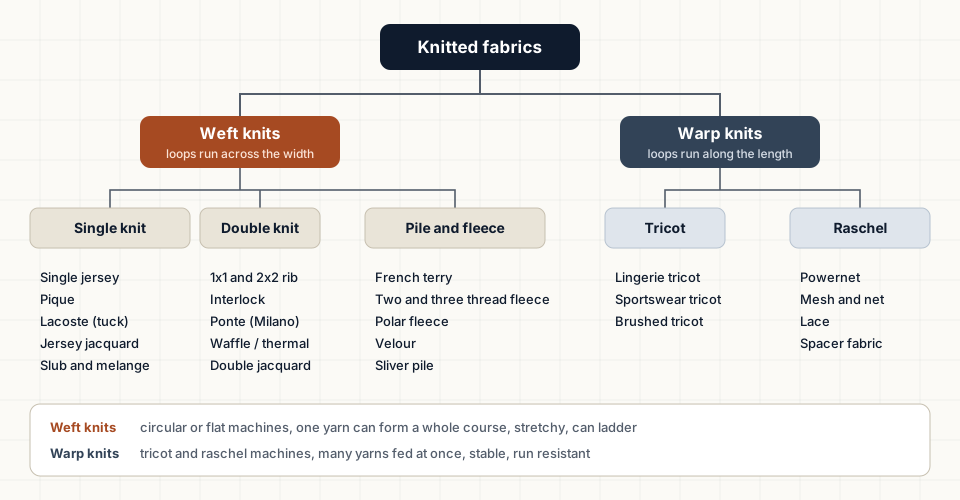
The two families: weft knits and warp knits#
| Weft knits | Warp knits | |
|---|---|---|
| How loops form | Along the width; one yarn can form a whole course | Along the length; every needle has its own yarn |
| Machines | Circular and flat knitting machines | Tricot and raschel machines |
| Stretch | Usually high, especially in width | Lower and more controlled |
| Laddering | Can run if a loop breaks | Run resistant |
| Typical products | T-shirts, polos, sweatshirts, underwear, sweaters | Lingerie, sportswear linings, powernet, mesh, lace |
| Share of apparel knits | Most everyday garment knits | Specialist and technical uses |
Most garments you will handle in a knit factory are weft knits made on circular machines. Warp knits matter for intimate apparel, swimwear and sportswear.
Weft knits: single knit fabrics#
Single knits are made on one set of needles. The face and back look different, and the fabric is thinner and lighter than a double knit from the same yarn.
Single jersey#
The base weft knit: V-shaped wales on the face, loop heads on the back. Light, soft and stretchy, it is used for most T-shirts, tops and underwear. Its weaknesses are edge curling and a tendency to twist after washing. See single jersey fabric and spirality in knitted fabric.
Pique#
Single jersey with tuck stitches added in a repeating pattern, which gives a textured, cellular surface. It is the classic polo shirt fabric. Single pique and double pique differ in how many courses carry tucks. See pique fabric.
Jersey variants#
- Lycra (elastane) jersey: elastane plated with the main yarn for recovery. Used for fitted tops and leggings.
- Slub jersey: made with slub yarn for an irregular, textured look.
- Melange (heather) jersey: made with yarn spun from fibers dyed in different shades.
- Jersey jacquard: patterns knitted in by selecting needles and colored yarns.
- Striped jersey: yarn-dyed stripes from feeders carrying different colors.
Weft knits: double knit fabrics#
Double knits use two sets of needles (cylinder and dial on circular machines). Both faces carry loops, so the fabrics lie flat, are thicker and are more stable.
Rib#
Face and back wales alternate, so the fabric contracts in width and has very high widthwise stretch and recovery. 1x1 and 2x2 are the most common. Rib is used for neckbands, cuffs, waistbands and fitted tops. See rib fabric.
Interlock#
Two 1x1 ribs knitted into each other. Smooth on both sides, thick, stable and soft, with no curling. Used for baby wear, polo shirts and printed sportswear. See interlock fabric.
Ponte (Milano rib)#
A firm double knit with a smooth face, often in viscose, polyester and elastane blends. It holds its shape well and is used for trousers, dresses and jackets where a knit must look tailored.
Waffle and thermal knits#
Tuck and float combinations create a raised grid that traps air. Used for thermal underwear, henleys and loungewear.
Weft knits: pile and looped fabrics#
French terry#
A jersey face with uncut loops on the back, formed by an extra loop yarn. Used for lighter sweatshirts, joggers and hoodies. See French terry fabric.
Fleece#
A looped-back fabric whose loops are brushed to raise the fibers, giving a soft, warm surface. Sweatshirt fleece is usually cotton-rich; polar fleece is usually polyester brushed on both sides. See fleece fabric.
Velour and sliver pile#
Velour is a knitted pile fabric with cut loops and a velvet-like surface. Sliver pile knits fibers directly into the back of the fabric to create a deep pile for fake fur and linings.
Warp knits#
Tricot#
A fine, smooth warp knit, often in nylon or polyester with elastane. It has fine vertical wales on the face and crosswise ribs on the back. Used for lingerie, swimwear linings and sportswear. Brushed tricot is used for tracksuits.
Raschel fabrics#
Raschel machines make a wide range of open and structured fabrics:
- Powernet: elastic mesh with strong recovery, used in shapewear and bras.
- Mesh and net: open structures for sportswear panels, linings and bags.
- Lace: decorative raschel lace for lingerie and fashion.
- Spacer fabrics: two faces joined by spacer yarns, used for padding, shoes and technical products.
Comparison of common knit fabrics#
The GSM ranges below are typical ranges seen in apparel, not specifications. Each order needs its own finished GSM and tolerance; see fabric GSM and the fabric GSM chart.
| Fabric | Family | Typical GSM | Stretch | Curling | Typical garments |
|---|---|---|---|---|---|
| Single jersey | Weft, single | 110 to 260 | Good in width | Yes | T-shirts, tops, underwear |
| Lycra jersey | Weft, single | 160 to 280 | High, good recovery | Yes | Fitted tops, leggings |
| Pique | Weft, single (tuck) | 180 to 240 | Moderate | Slight | Polo shirts |
| 1x1 rib | Weft, double | 180 to 260 | Very high in width | No | Neckbands, cuffs, fitted tops |
| Interlock | Weft, double | 200 to 280 | Moderate | No | Baby wear, polos, sportswear |
| Ponte | Weft, double | 250 to 350 | Low to moderate | No | Trousers, dresses, jackets |
| French terry | Weft, looped | 240 to 330 | Moderate | Slight | Sweatshirts, joggers |
| Sweatshirt fleece | Weft, brushed | 260 to 400 | Moderate | Slight | Hoodies, sweatshirts |
| Tricot | Warp | Light to medium | Low to moderate | No | Lingerie, linings |
| Powernet | Warp (raschel) | Light | High, strong recovery | No | Shapewear, bras |
How to identify a knit fabric#
- Look at the face with a magnifier: V-shaped wales on both sides suggest interlock or rib; on one side only, single jersey.
- Stretch it across the width: rib stretches far and snaps back; interlock stretches less.
- Check the edges: single knits curl, double knits lie flat.
- Pull a yarn from the cut end: weft knits unravel course by course; warp knits resist unravelling.
- Look at the back: loops mean French terry, fluffy raised fibers mean fleece.
Choosing a knit for a garment#
| Need | Good choices |
|---|---|
| Light, cool, low cost | Single jersey |
| Structured casual shirt | Pique, interlock |
| Warmth | Fleece, French terry, thermal waffle |
| Close fit with recovery | Lycra jersey, lycra rib, powernet |
| Tailored look in a knit | Ponte |
| Breathable sports panels | Mesh (warp or weft) |
Once the fabric is chosen, plan its consumption by weight; see knit fabric consumption. Also check how it will behave in washing: fabric shrinkage is usually the first property buyers test on knits.
Common problems across knit fabrics#
- Spirality in single knits, which makes side seams twist.
- Barre: horizontal bands from yarn lot or tension differences. See barre.
- Holes and laddering from needle damage or yarn breaks. See holes.
- Pilling on fleece and blends. See the pilling test.
- Width and GSM variation between lots when finishing is not controlled.
Frequently asked questions#
What is the most common knit fabric? Single jersey. Most T-shirts and a large share of tops and underwear are made from it.
Is rib a single or double knit? Rib is a double knit; it needs two sets of needles to form face and back wales.
Which knit is best for polo shirts? Pique is traditional; interlock gives a smoother look.
Do warp knits stretch? They stretch less than most weft knits unless they contain elastane, as powernet and many tricots do.